app_localeMedicare honlap
Nyelvválasztás megjegyzése.
1 év
first-party

The saddle joint, located at the base of the thumb, is the most important joint of the hand in terms of function. Unique to humans among all species on earth, it allows the thumb to be turned opposite the other fingers – thus allowing a stable grip and fine movements (e.g. “tip grip, key grip”). As a result, it is also the most mobile and used joint of our hand.
Osteoarthritis is one of the most common hand conditions over the age of 40. It is much more common in women than in men and often affects both hands. The most commonly known causes of its development are overexertion and previous injuries.
Our colleagues are happy to help!
Our colleagues are happy to answer every question!
The most common symptoms of saddle joint cartilage wear are pain, swelling, deformity of the joint, loss of grip strength, and reduced thumb movement, initially during exertion and later at rest. The exact diagnosis can be confirmed by X-ray.
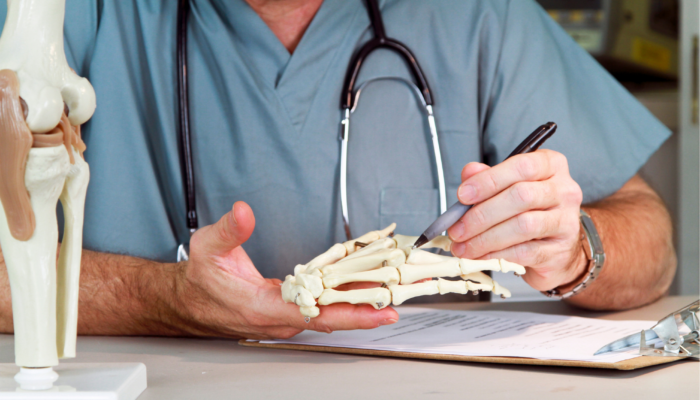
The treatment of the disease depends on the symptoms, the extent of cartilage damage and the activity level of the patient. In the initial stages, conservative treatment may be sufficient: resting of the thumb, local cooling, anti-inflammatory drugs, physiotherapy or injections into the joint. If conservative treatment is unsuccessful or if the symptoms worsen, surgery may be considered to eliminate pain and restore function.
During saddle joint arthroplasty, unlike hip and knee joint replacements where foreign material is implanted, the inflamed, painful parts of the joint are removed and a new joint is formed from the body’s own tissues. This is followed by several weeks of fixation.
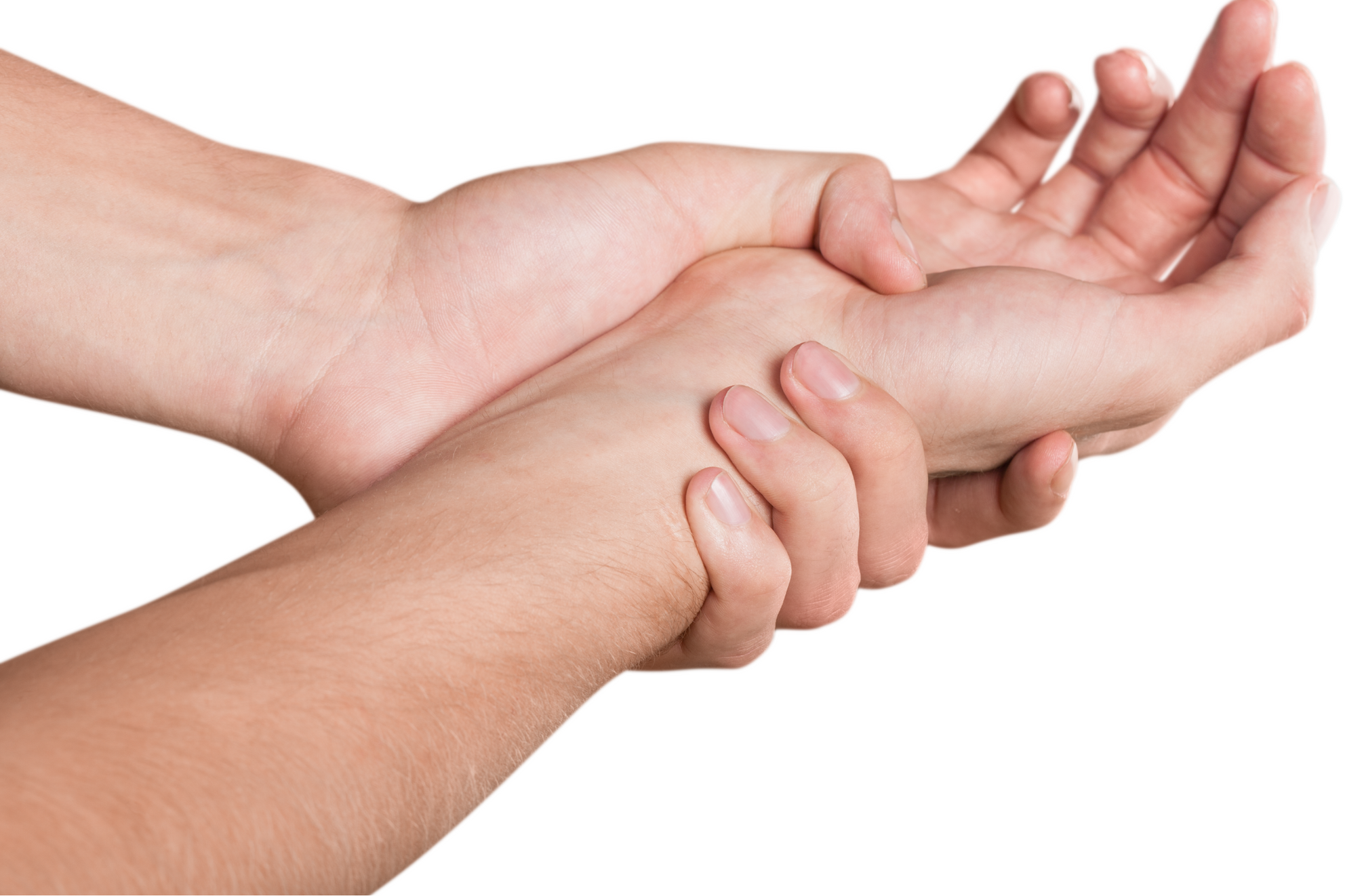
According to international statistics, the outcome after surgery is 90-95% good or excellent.
Very rarely, but even with the greatest care, inflammation and infection of the surgical site, damage to the surrounding anatomical structures – tendons, muscles, blood vessels, nerves, adjacent bones – allergic reactions, reduced mobility, instability of the operated joint, pain, swelling, hypertrophic or keloid scars can occur during and after the operation. In milder cases, medication may be necessary, in more severe cases, the operation might need to be repeated.
A careful examination takes place before the surgical plan is made. A physical examination can be used to assess the range of movement, whether it is restricted or abnormal, and the intensity of any pain. Imaging tests (X-rays, MRI, CT) provide information on the geometry of the joint.
The dressing is changed the next day after the operation and it is recommended to have the suture removed 14 days later. After the operation, 3-4 weeks of plaster fixation, followed by 3-4 weeks of special fixation, after which active-passive physiotherapy is required. Final full function is expected 3-6 months after surgery.
The price of the saddle joint arthroplasty surgery includes the cost of the surgery, as well as the post-operative hospital stay and follow-up examination.
The price of the pre-surgery consultation and pre-operative tests are not included in the surgery fee, please contact our Customer Service for details.
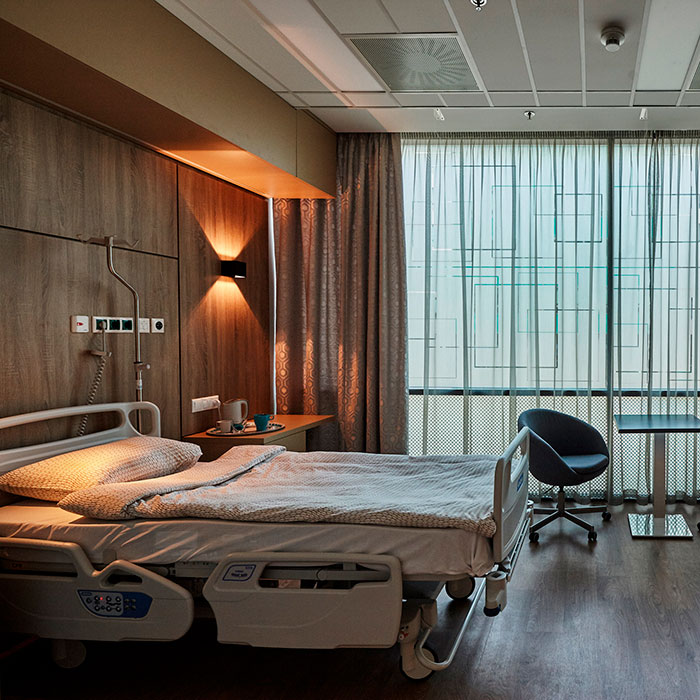
We accommodate our clients in modern, comfortable, air-conditioned single rooms. Each room has its own bathroom, fridge and television, as well as free WIFI access. We also provide our clients with individual nurse supervision to assist with their continued recovery during their stay.
Informational content only The textual content published on this page is for general information purposes only and does not constitute medical advice, a diagnosis, or a treatment recommendation. Proper assessment, examination, and therapeutic decisions always require a personal medical consultation and, where appropriate, further specialist opinion. Medicare Egészségközpont Zrt. makes every reasonable effort to keep the content up to date; however, it accepts no liability for the completeness or accuracy of the information published or for consequences arising from decisions based on it.