app_localeMedicare honlap
Nyelvválasztás megjegyzése.
1 év
first-party

At our ophthalmology clinic, our specialists deal with various diseases of the eye, where, in addition to complaints and screening-type examinations, we also provide surgical solutions (e.g. cataract removal surgery) to our clients. The ophthalmic examination begins with the recording of individual and family medical history and a detailed questioning of any complaints.
Our colleagues are happy to help!
Our colleagues are happy to answer every question!
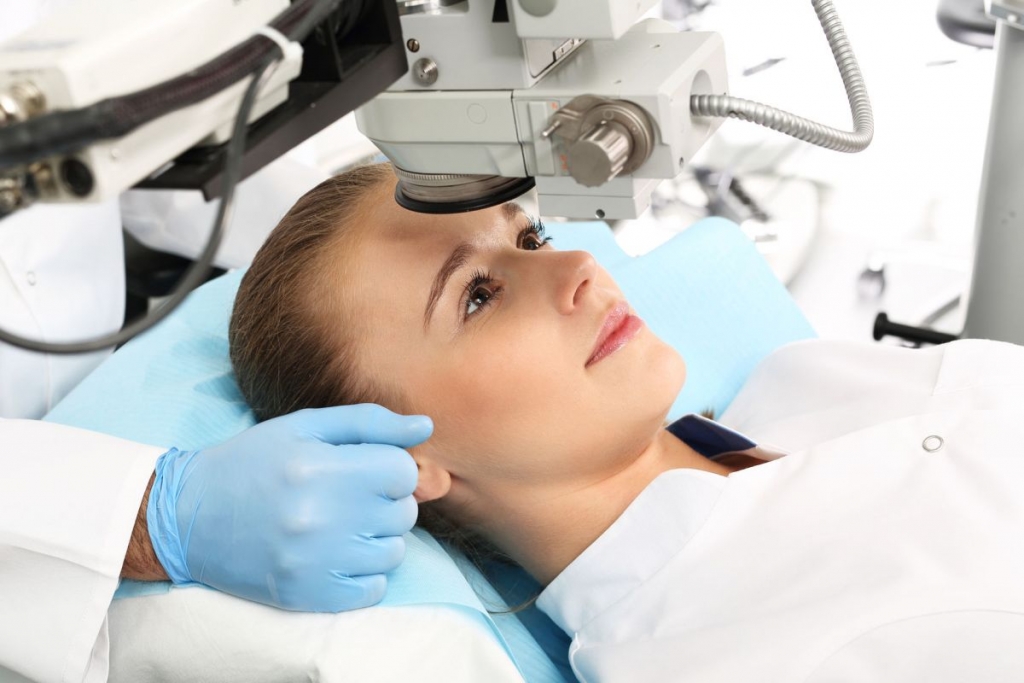
Ophthalmic examination (and, where appropriate, ophthalmic surgery) is important because the treatment of diseases discovered in time can prevent the development of more serious complications later on, possibly visual impairment.
Cataract is the partial or complete greying of the lens. Cataract is a disease associated with the gradual development of vision impairment over the years, which is painless and part of the aging process. The most common symptoms of the disease are blurred vision, fading colours, poor night vision, sensitivity to bright lights.
The pterygium is the conjunctiva that extends to the cornea. The conjunctiva is a loose, transparent, woven membrane that covers the white of eye and the inner surface of the eyelids. Pterygium affects both eyes in most cases and occurs in the nasal region, it can be annoying mainly because of its aesthetic appearance.
Fibroma is a benign tissue proliferation of connective tissue cells that develops in most cases in middle-aged people, primarily in women. It is more common in overweight people. It does not cause health problems but it can be easily irritated or aesthetically annoying due to its location. It is removed by surgical excision.
The eye cyst is a benign, water-filled bladder with a thin capsule that can occur on the conjunctiva. The reason for its formation is the occlusion of the outlet tube of the lacrimal gland. Lacrimal glands help keep the eye moist. An eye that does not regularly get the right amount of tears can become very painful.
Barley removal is a small ophthalmic operation that takes place on the inside of the eyelid, from the conjunctiva. Purulent sebum secretion, which cannot be emptied, is removed and, in most cases, the inflamed granulation tissue formed is also excised. There is no need to suture the wound at the end of barley removal. After the procedure, a pressure bandage is placed on the eye.
An atheroma, or sebaceous gland, is a benign lesion located just under the skin. It is caused by a blockage in the outlet tube of the sebaceous glands. Not only can it cause an aesthetic problem, but it can also become infected, resulting in the formation of abscesses and then persistent discharge. It is removed as part of a small ophthalmic surgery.
Sagging of the skin of the upper eyelid to an extent that has little or no effect on the opening of the eyelid. It usually occurs on both sides. It does not affect vision. The surgical procedure is for aesthetic purposes. Generally, surgery is recommended when the skin rests on the eyelash line.
The inversion of the entire lower eyelid causes the eyelash line to contact the eye surface. It causes irritation complaints that do not want to go away, and in many cases, the diminution of the cornea. Restoring eyelid rotation in all casesn surgical, which means, in addition to the aesthetic purpose, the preservation or regeneration of the integrity of the eyeball.
Unilateral or bilateral ectropion of the lower eyelid is most often the result of age-related connective tissue loosening caused by weakening of the tendon plate of the eyelid. The conjunctiva of the eye is exposed to constant danger in contact with the outside world, so the elimination of the disease is also recommended for the protection of the eye in addition to the aesthetic purpose.
Xanthelasma is a yellowish, slightly raised, velvety-touch cholesterol deposit on the upper and lower eyelids, in most cases symmetrical. It is removed by excision.
We accommodate our clients in a modern, pleasant, air-conditioned single room. Each room has a private bathroom, fridge and TV, and free WIFI access. We also provide our clients with individual nurse supervision, who will help your continuous recovery during your stay.
Informational content only The textual content published on this page is for general information purposes only and does not constitute medical advice, a diagnosis, or a treatment recommendation. Proper assessment, examination, and therapeutic decisions always require a personal medical consultation and, where appropriate, further specialist opinion. Medicare Egészségközpont Zrt. makes every reasonable effort to keep the content up to date; however, it accepts no liability for the completeness or accuracy of the information published or for consequences arising from decisions based on it.