app_localeMedicare honlap
Nyelvválasztás megjegyzése.
1 év
first-party

Diagnostic laparoscopy is most often necessary in the following cases:
Our colleagues are happy to help!
Our colleagues are happy to answer every question!
For therapeutic purposes, gynaecologists perform laparoscopic surgery when there is a clearly diagnosed disease (ovarian cyst, ectopic pregnancy, myoma, adhesions after abdominal surgery, malignancies) or artificial infertility.
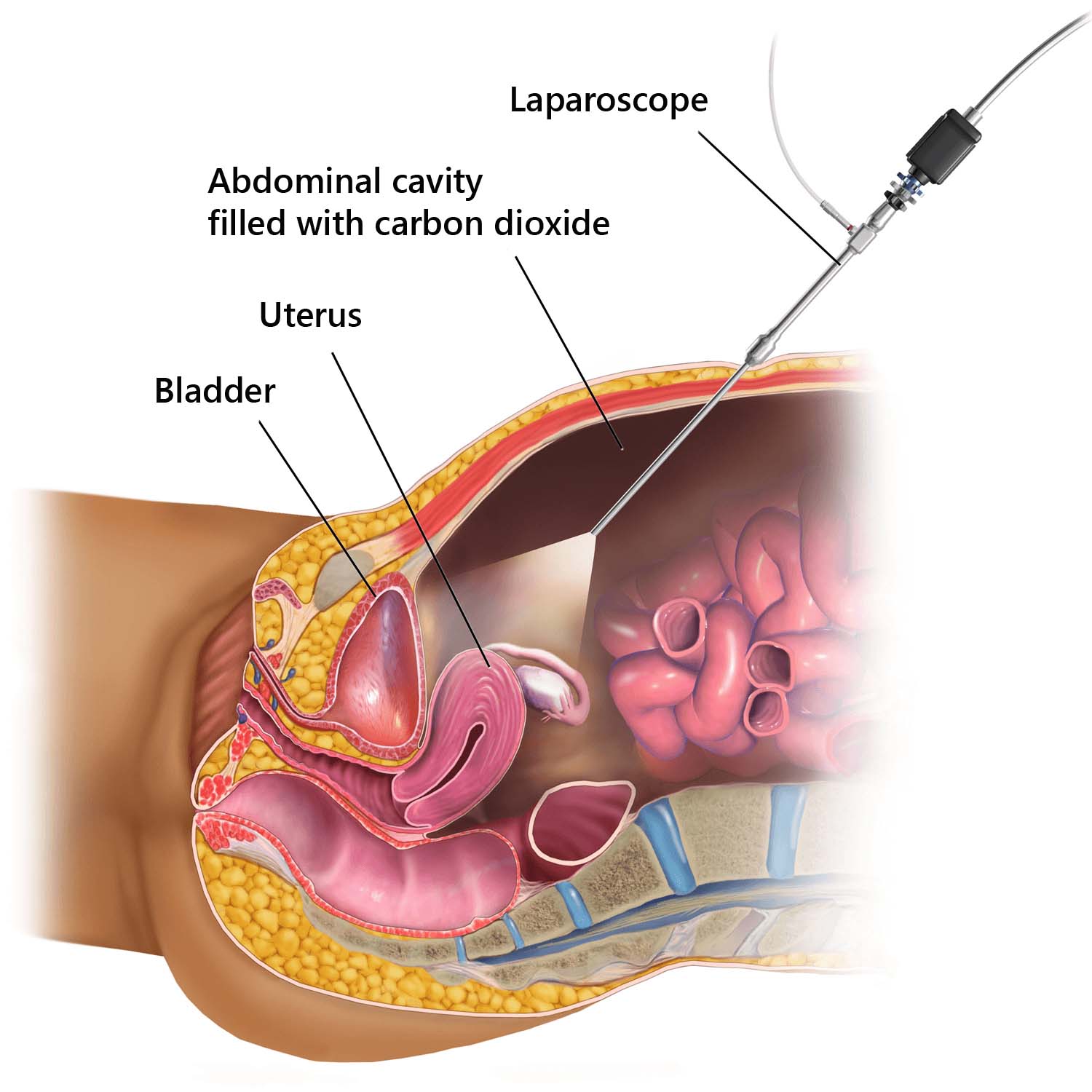
Thanks to modern instruments and procedures, laparoscopic surgery can now be performed gently without large abdominal incisions, which is also an aesthetically significant difference.
The operation is always performed under anaesthesia. Penetration into the abdominal cavity is usually done through the skin, through 3-4 small openings, mostly in the navel or on the lower part of the abdomen on both sides. Carbon dioxide gas is used to pre-fill the abdominal cavity because the internal organs in the inflated abdominal cavity are separated from each other.
The laparoscope is inserted into the abdominal cavity through an incision made in the navel. The abdominal organs (liver, gallbladder, stomach, intestines) become visible on the screen.
In addition to the visual inspection of the organs, it is also possible to take samples or perform surgery, if necessary. The removal of larger formulas and organs (myoma, uterus) can also be removed in a laparoscopic procedure.
Diagnostic laparoscopy usually lasts 30-80 minutes, in the case of possible major interventions (e.g. myoma surgery, hysterectomy) the surgical time can be 120-180 minutes. After surgery, carbon dioxide is released from the abdominal cavity and abdominal wall incisions are closed with stitches.
Without abdominal incisions, the healing process is also shorter, because after 1-2 days of recovery you can leave the hospital.
In contrast to common abdominal surgery, laparoscopic interventions do not pose a particular risk in the majority of cases, according to statistics, the frequency of more serious complications does not exceed 1-2%.
Anaesthesia can have side effects that can be treated immediately by our qualified staff.
After surgery, you may experience lower abdominal pain, mild nausea, pain in the shoulders and neck, fatigue fever, scratching pain in the throat, but these usually resolve spontaneously within a few days or can be treated well locally.
Depending on the laparoscopic surgery or the abdominal mirroring procedure, you can leave the hospital at the earliest after 6 hours, but usually after 24-48 hours of observation.
Measure your temperature twice a day until you have the sutures removed (which is always a week) after diagnostic laparoscopy. It is also recommended to avoid sexual intercourse, a sitting bath and the use of tampons for 4 weeks after surgery. If you have a temperature, bloating or severe lower abdominal pain in your home after the operation, see your doctor immediately.
Discussion of histological results of samples taken during diagnostic laparoscopy and follow-up examination will be due four weeks after surgery.
Informational content only The textual content published on this page is for general information purposes only and does not constitute medical advice, a diagnosis, or a treatment recommendation. Proper assessment, examination, and therapeutic decisions always require a personal medical consultation and, where appropriate, further specialist opinion. Medicare Egészségközpont Zrt. makes every reasonable effort to keep the content up to date; however, it accepts no liability for the completeness or accuracy of the information published or for consequences arising from decisions based on it.