
app_localeMedicare honlap
Nyelvválasztás megjegyzése.
1 év
first-party

Endocrinology deals with the functioning of the endocrine glands and diseases of the hormonal system. Hormones are involved in the regulation of many functions of our body, which is why the symptoms and complaints are widespread and can often be less characteristic on their own. Therefore, it is important to interpret the symptoms and complaints together, in their context. Since many other problems that do not necessarily or primarily affect the hormonal system can also lead to a similar symptom complex (e.g., fatigue can be caused by heart failure, iron deficiency, or thyroid disease, among many others), it may be worth starting the examination with a doctor who deals with a wider range of diseases (e.g., internist, GP, pediatrician).
Our colleagues are happy to help!
Our colleagues are happy to answer every question!
You may have previously been diagnosed with a hormonal disease or your GP may suspect hormonal disease. You may also have a suspicion of hormonal disease based on your complaints.
It is the task of the endocrinologist to confirm or clarify the diagnosis, to detect any related medical conditions, and to establish an examinational and therapeutic plan. They can interpret the results of each diagnostic test (blood samples, ultrasound, scintigraphy, CT or MRI, histological examination, etc.) in a complex way, know the most modern therapeutic options and can choose the most suitable one for you. It is worth consulting with a specialist before ordering tests because when evaluating blood test results, several parameters may be needed, which must be tested at the same time, and thus unnecessary tests can be avoided.
The endocrinologist works with many other specialists, gynaecologists, otolaryngologists, dermatologists, urologists, ophthalmologists, dieticians, general practitioners, or paediatricians if needed.
If you also use the services of the associate specialities in our Institution, your treating physicians have the opportunity to discuss your case in person, so we can analyse your problems in a complex, multi-faceted, efficient way and find the optimal solution.
Complaints related to the hormonal system are often very general and difficult to grasp (e.g. fatigue, poor sleep). However, if these problems persist or worsen over time, it is definitely worth seeking a medical opinion. The internist, GP or paediatricia can decide if it is worth looking for a hormonal, lifestyle, or other reason behind the specific complaints. If there is a hormonal cause, you should consult an endocrinologist.

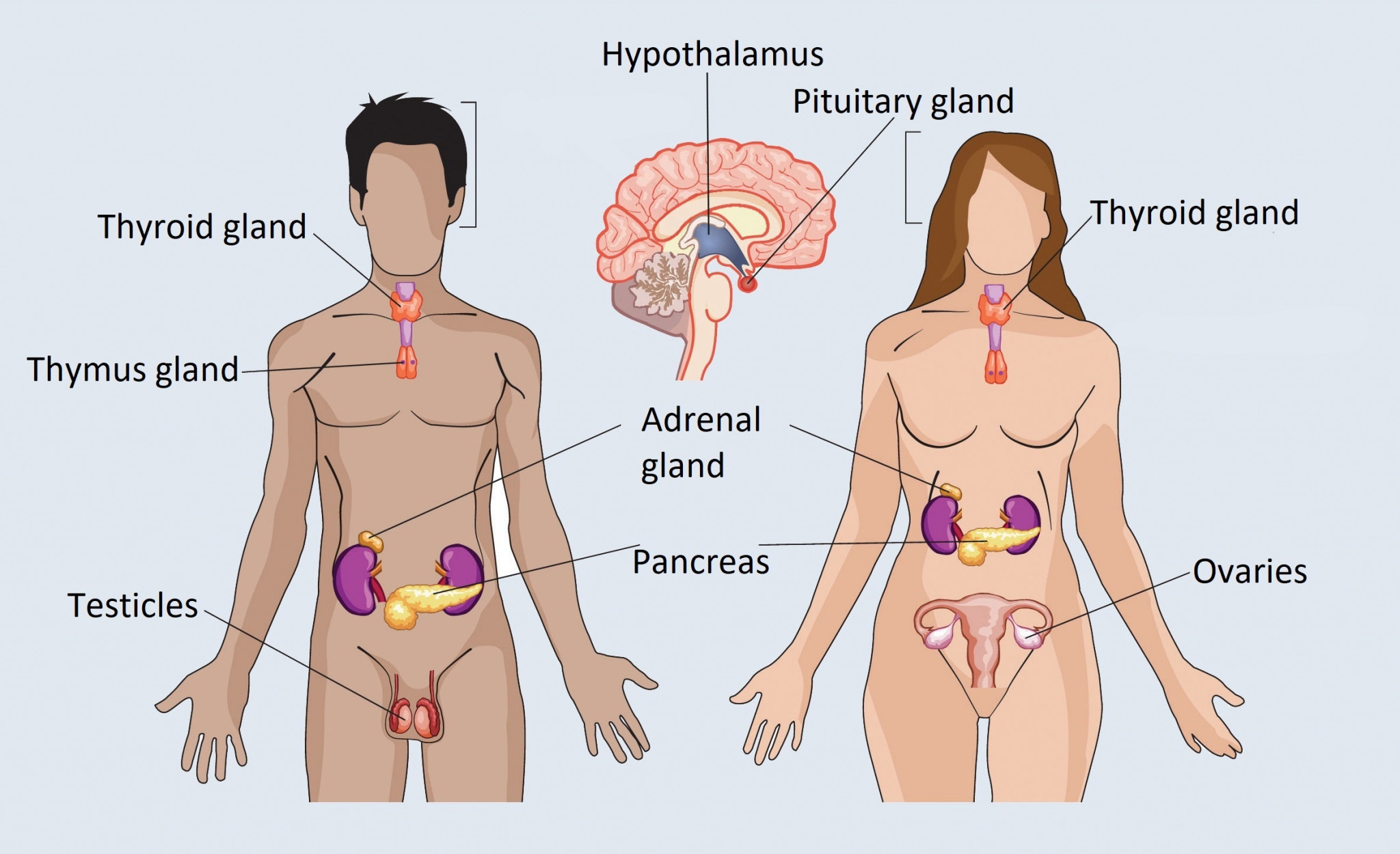
When it comes to the diseases of the hormonal system, the function of individual hormones is not adapted to the needs of the body, i.e. insufficiency (too little hormone) or overactivity (too much hormone) is formed. It is also possible that a previously well-functioning hormone loses its effectiveness due to something, an increasing amount must be produced in order to reach the desired biological effect (resistance or insensitivity). Benign and malignant tumours can also develop in the hormonal glands, causing the gland to enlarge, possibly with a palpable lump.
Congenital diseases of the hormonal system usually cause complex, characteristic symptoms, the recognition and treatment of which is the joint task of the paediatrician and the paediatric endocrinologist.
The endocrinologist deals with the body’s hormonal disorders and their curing. They aim to restore the tilted balance in the body, optimizing the functioning of sick endocrine glands. Hormonal diseases that endocrinology deals with:
At the endocrinology clinic, the patient’s complaints are first thoroughly explored, and then the doctor requests a laboratory examination and often an ultrasound as well, specifying the hormones to be tested. During the subsequent evaluation of the results, additional specialist examinations will be ordered if necessary. In this case, our internists, radiologists, otolaryngologists, ophthalmologists, dermatologists, urologists and gynaecologists are available to our patients.
It is in the common interest of the endocrinologist and the patient to get as accurate information as possible about your problem as soon as possible. Therefore, before the endocrinological examination, it is important to summarize and possibly write down your complaints and observations. It is important that you can accurately list the medications you have previously taken. Previous hospital final reports, laboratory results, ultrasound or histological examinations may be important in assessing the time course of complaints, please bring them with you if you can! When examining children, the Health Records, or any previous developmental data (weight, height) requested from the school physician, may provide important information about the child’s development.

Laboratory tests
The endocrinologist’s “main weapon” is measuring hormone levels. Since our hormones reflect the changing needs of the body, often within quite wide limits, it is essential for accurate results that blood is drawn at the right time and in the right way: hormones that show daily fluctuations, the time of blood count happens usually early in the morning, for female hormones the day of the blood draw depends on the menstruation cycle, and when it comes to testing for carbohydrate metabolism, having an empty stomach is a must.
Hormone results often should not to be evaluated on their own, but in comparison with other hormones, so it is important not to rely solely on the laboratory results, but also to be evaluated by a skilled professional who can interpret the findings in context.
During the endocrinology test, your endocrinologist will most likely order various hormone measurements. However, if you have previously been diagnosed with a hormonal disease or suspect one of the hormonal systems, you can choose from our endocrine blood count packs before the specialist examination, so the endocrinologist can get an idea of the condition of the hormonal system on your first visit and can make a more accurate diagnosis.
Ultrasound
Ultrasound is a gentle, painless procedure that is perfect for detecting internal medical, endocrinological, urological, articular, gynaecological and vascular problems. Using the ultrasound, our endocrinologists can infer from the structure of the thyroid gland (nodular nature), the detection of inflammation and the possible presence of tumours. If necessary, thyroid biopsy is also performed using ultrasound. The procedure is no more painful than the feeling of a tiny needle prick when a tissue sample is taken. The histological specimen is evaluated by highly experienced pathologists based on the scoring systems of international recommendations. The structure of the ovaries and testicles can be examined with ultrasound, and in some cases abdominal ultrasound can also be informative. The ultrasound examination is perforned by a radiologist.
Advanced diagnostics
The adrenal glands are often not or not accurately seen on ultrasound, and the most accurate picture of the structure of the adrenal glands can be obtained by CT or MRI. In case of the diseases of the pituitary gland, it is important to know the structure of the gland, this can be achieved by contrast-enhanced MRI. Recent kidney function blood counts are required before contrast tests! At our advanced Diagnostic Center, we perform the examinations with the most modern CT and MRI machines, the findings are evaluated by our experienced radiologists.
In some cases, it is not only necessary to measure hormones in the baseline state, but also to examine the hormonal responses of the body during so-called dynamic tests. Among these, glucose tolerance and dexamethasone suppression test can be performed in our institution.
Some aspects of the functioning of the adrenal medulla and cortex can also be assessed based on the breakdown products of hormones excreted in the urine, these tests are also available in our institution.
Bone density testing (osteodensitometry, ODM) provides information about the mineral content of bones. Based on a wrist X-ray, the so-called bone age can be calculated, which can be informative in monitoring the puberty of children.
Most endocrine diseases can be treated with medication and/or diet. In some cases, surgery or isotope treatment may be needed. At our private clinic in Budapest, our Diagnostic Center is at the disposal of our patients with the latest technology. Most of the examinations and interventions can be performed in our institution, and we try to help organize additional care.
Informational content only The textual content published on this page is for general information purposes only and does not constitute medical advice, a diagnosis, or a treatment recommendation. Proper assessment, examination, and therapeutic decisions always require a personal medical consultation and, where appropriate, further specialist opinion. Medicare Egészségközpont Zrt. makes every reasonable effort to keep the content up to date; however, it accepts no liability for the completeness or accuracy of the information published or for consequences arising from decisions based on it.