app_localeMedicare honlap
Nyelvválasztás megjegyzése.
1 év
first-party

The name bilirubin comes from the Latin words bilis (bile) and ruber (red). It is produced in organs that are involved in breaking down red blood cells – the spleen, liver and some lymph nodes. It is also known as bile pigment, and it is the breakdown product of haemoglobin, which is yellow in colour. During its lifetime, it binds to proteins in the blood plasma, from where it is transported to the liver and then to the bile. The metabolic degradation product of bilirubin gives the stool its brown (stercobilin) and urine’s yellow (UBG) colour.
In case of liver disease or increased breakdown of red blood cells, its levels may increase. It causes itching and yellowing of the skin, mucous membranes, and the white of the eyes.
Laboratory testing may indicate the presence of any form of liver or bile duct disease. The amount of bilirubin in the blood is measured.
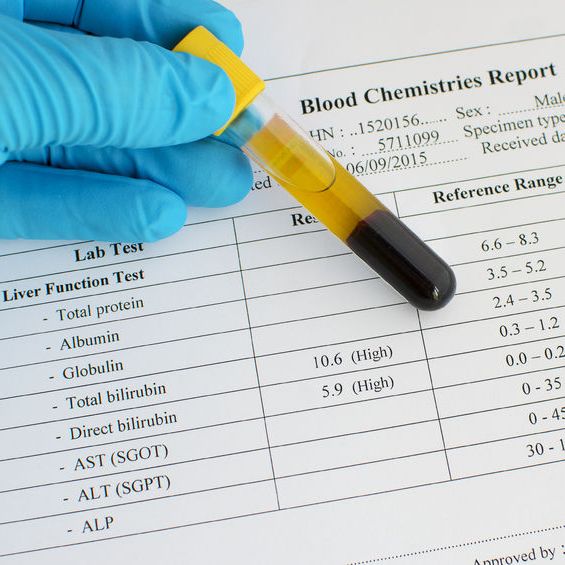
Your doctor will order the test if they notice symptoms suggestive of liver disease or biliary obstruction, or if jaundice is suspected.
A blood sample taken from a vein is needed for the test.
In newborns, due to the immature enzyme system, bilirubin builds up (neonatal jaundice) when haemoglobin is broken down. It is a physiological process that takes place in 1-3 weeks. If jaundice persists, a thorough investigation is required due to suspicion of biliary malformation.
Adults may also have elevated bilirubin levels due to decreased or underactive bilirubin-converting enzyme (Gilbert’s disease). High bilirubin levels can indicate several liver and bile duct disorders, such as hepatitis or cirrhosis, and alcoholism, or even a viral illness. In addition, even in case of malnutrition, its level may increase minimally. However, the result in itself is not a diagnosis, it is worth examining liver function with other tests.
The test alone cannot diagnose any disease, and in all cases consult an internist or haematologist to determine the exact diagnosis and required therapy.
Informational content only The textual content published on this page is for general information purposes only and does not constitute medical advice, a diagnosis, or a treatment recommendation. Proper assessment, examination, and therapeutic decisions always require a personal medical consultation and, where appropriate, further specialist opinion. Medicare Egészségközpont Zrt. makes every reasonable effort to keep the content up to date; however, it accepts no liability for the completeness or accuracy of the information published or for consequences arising from decisions based on it.